The Open Door
"Contribute to the needs of the saints and seek to show hospitality."—Romans 12:13 (ESV)
My father never used the word “hospitality.” He simply had room for people. Family who visited stayed as long as they needed. Friends gathered at the spur of the moment.
The table extended naturally to whoever was nearby. I absorbed this before I had language for it, before I became a believer and encountered the theological category, before I understood that what my father was practicing had a name and a Scripture and a long tradition behind it. By the time I heard the word I already knew the thing. He had given it to me without intending to.
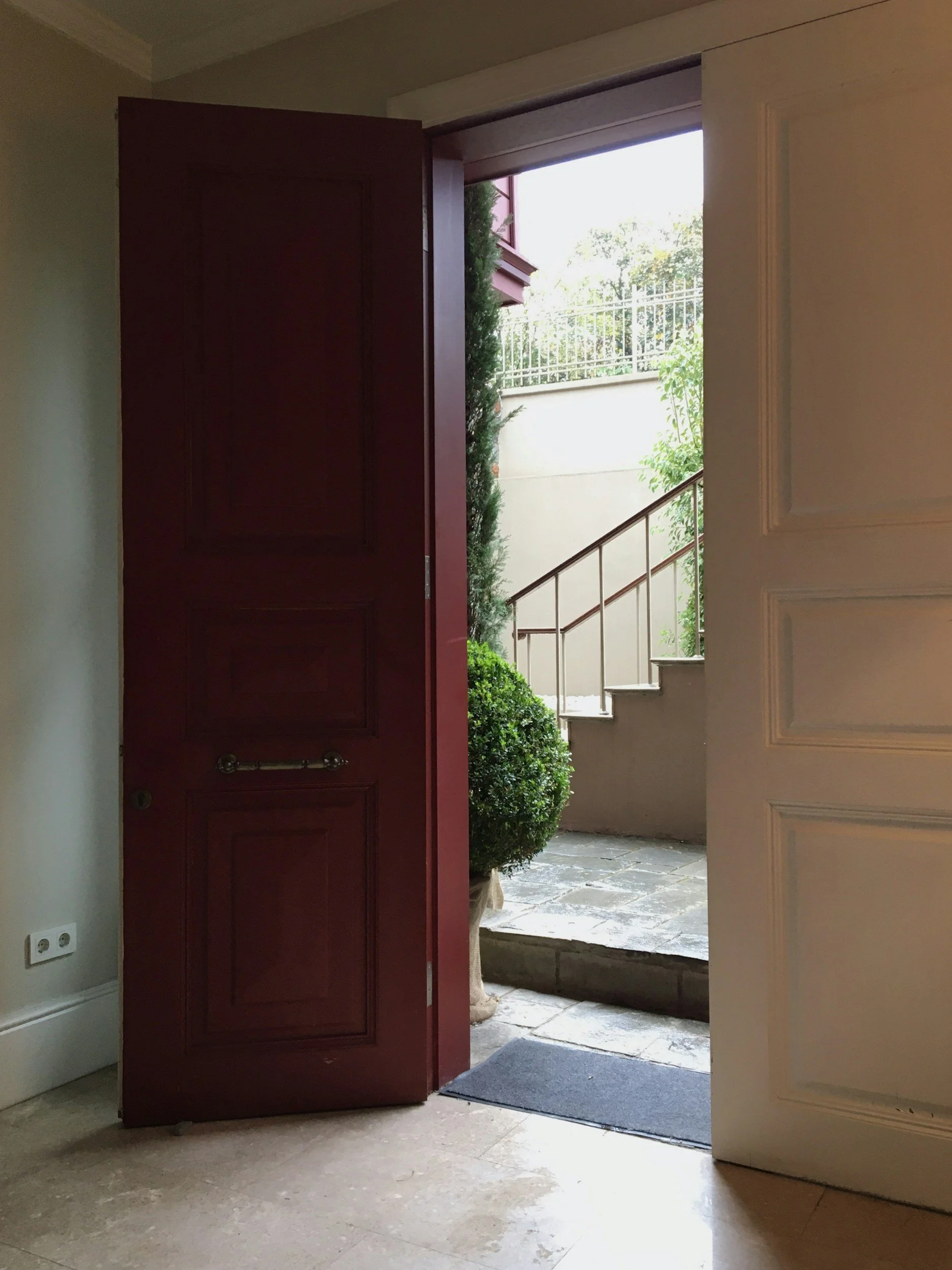
This is how the best things are usually transmitted. Not through instruction but through atmosphere. Not through a lesson on hospitality but by simply opening the door and welcoming others in.
What Hospitality Is
Romans 12:13 does not say “be available for hospitality” or “practice hospitality when circumstances allow.” It says pursue it, which is an active, intentional, directional verb.
Hospitality in Scripture is not a personality trait some people have and others don't. It is a posture of the heart that prefers others, that moves toward people rather than waiting for the right conditions, that makes room before it feels convenient to do so.
This is different from entertaining. Entertaining is oriented toward the host: toward what she can produce, how the home looks, whether the meal is impressive enough to justify the invitation.
Hospitality, on the other hand, is oriented entirely toward the guest: toward what she needs, whether she feels welcomed, whether she is comfortable.
I don't like entertaining much. As someone who is already bent towards performance, it causes stress. An entertainment mindset leaves me feeling pressured to present a version of my home and life that is better than the ordinary reality.
But what I do like is having people in my actual life, around my actual table, in the middle of my ordinary week. That distinction has helped me to keep the main thing the main thing.
When we conflate hospitality with entertaining, it either exhausts us with the performance of welcome or it stops us from inviting people because we can never be ready enough. Neither of those is the open door.
The Permission of the Laundry Basket
When I was a new wife, one of the most comfortable homes I visited had laundry in baskets on the couch. You know what? That immediately made me feel special. She thought of me as a friend she didn’t have to clean up for. My hostess didn't apologize for it. She simply moved one basket and sat down and we had a great conversation. I felt relaxed.
I have thought about that visit many times since. It gave me the permission to let people into my actual life rather than the version I would have preferred to present. I learned to accept that tidy enough is fine. Being present is what matters more.
This is what my guests actually need too. Not an impressive meal or a guest room or matching dishes but unrushed time. Genuine attention. The feeling that there is no next thing more important than this, that they are worth staying at the table for.
Some of our best conversations come when we linger after dinner in our home. It silently communicates: You are not an imposition. There is room for you here. You are welcome to stay.
Welcome Travels
Hospitality is not about how big or small your space is because hospitality is not primarily located in the space.
Rather, welcome is something you carry. It is a spirit or posture that travels with you: to church, to a coffee shop, to a corner of a parking lot after a Sunday service. Since we live far from our church and it is hard to invite people to our house afterwards for lunch, my husband and I have found a way to bring it in.
So we bring a crockpot of lunch to church and set it up in whatever corner we can find. It is not in our home. It is not elaborate. But it is ours. In a way it’s a portable table. The conversations we have are just as meaningful as those in our own home.
This is good news, even if you have a small space. It’s also not an excuse if your square footage is limited.
If welcome lives in the person and not the property, then the woman in the small apartment is not at a disadvantage. She may actually be more free. There is less temptation to make hospitality about what her home can display and more able to focus on her guest’s comfort and convenience.
When I have a more flexible perspective of hospitality, I have felt much more free. Because I bring that hospitality and welcome to others, I don’t even need to be at home. My prayer is that as a seek to show hospitality as Romans 12:13 urges us, they can begin to know the welcome and hospitality of God himself.
This is not hospitality as social pleasure, though it is often that too. It is hospitality as a theological act, the extending to others the welcome we have ourselves received from God, who pursued us before we knew we needed to be found.
You Don't Need a Guest Room
This truly is good news! All you need is a willing heart. If your home is small, borrow from someone else: a corner in the coffee shop or a park bench works just as well if you also bring a hospitable heart with you. If you want to be fancy when you meet at home but don’t have time for a meal, pick up a favorite beverage and have it ready. If you want a meal on the go, learn how to use a crockpot!
The open door is not a feature of a well-appointed home. It is a posture of a person who has received welcome and cannot help but extend it. Your small space is not standing between you and a generous hospitality practice. In all likelihood, it never was.
From My Home to Yours
Who have you been meaning to invite and haven't yet? What are your excuses: the house isn’t ready, the timing isn’t right, or you’re not sure you had enough to offer? Take a step of faith and use one of the ideas in this post to connect with someone this week, even if it’s not at home.