Once for All: Leviticus and Our Perfect Substitute
"For it is impossible for the blood of bulls and goats to take away sins...But when Christ had offered for all time a single sacrifice for sins, he sat down at the right hand of God." — Hebrews 10:4, 12 (ESV)
A blog post on Leviticus…really? Yes—and I’ll be honest. This is the one book that leaves me squeamish. But at the same time, it is the one book that actually brings so much wonder and worship. I hope you’ll give me a chance to explain.
Relevant, Not Just Ritual
The first thing I learned about the sacrificial system is that the worshipper himself did the killing—not the priest, as I originally thought. (For example, see Leviticus 1:4—the “he” is referring to the one bringing the offering, differentiated from the priests mentioned in verse 5.) The priest then drained the blood, cut up the sacrifice, and burned it in the fire.
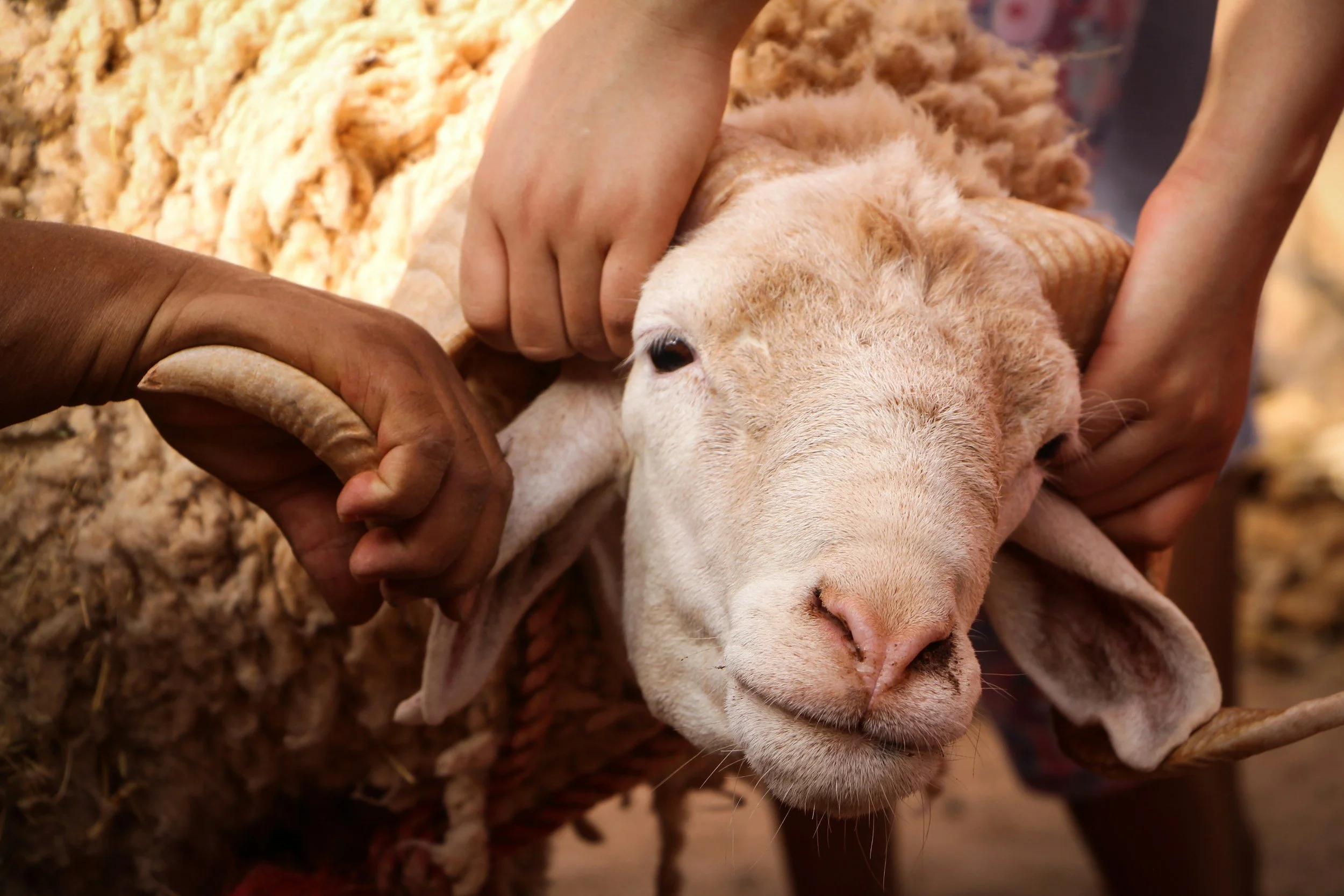
This is significant in itself. The worshipper didn't hand the animal to a priest and step back. Rather, they would press their hands onto the animal's head, fully leaning their weight on its body and then slaughter it themselves. This is God’s prescribed way for sinners separated from Him to be reconciled to Him—through blood.
Amazingly, despite the fact that His holiness cannot be in the presence of sin, God wants to be right there with His people. The tabernacle sat at the center of the Israelite camp. Not on the outskirts or a safe distance. Right in the middle.
This tells us something incredibly important about our God. He is a God who draws near to us. Knowing that we cannot draw near to Him because of our sin, He has lovingly made a way—even if it is gory to our modern-day sensibilities, a way that satisfies His requirements for justice to be done.
Christ Our Sacrifice
As Hebrews 10:4 points out, the problem with animal sacrifices is that they are not complete. They will serve for the moment, but the sacrifice will need to be made, again and again, over and over.
The sacrificial system He designed was detailed, repetitive, and costly. There were five categories of offering — burnt, grain, peace, sin, and guilt — each addressing a different dimension of the broken relationship between God and His people.
The burnt offering consecrated the whole person to God.
The grain offering presented a life of obedience.
The peace offering restored fellowship — it was, remarkably, a shared meal between the worshipper and God.
The sin and guilt offerings addressed specific failures and the debt they created.
Together they constitute one answer to one question: how can sinful people live in the presence of a holy God?
But here is what the system kept saying, year after year, animal after animal: this is not enough…yet. The repetition was its own sermon. The blood of bulls and goats might cover it temporarily until the real sacrifice came.
And He did.
Christ fulfills the burnt offering by giving Himself completely, holding nothing in reserve (Romans 8:32).
He fulfilled the grain offering by a perfectly obedient life, whose righteous record is now imputed to us (2 Corinthians 5:21).
He is the one who makes peace between God and sinners (Colossians 1:20), and who now sets a table — the Lord's Supper — for those who were once enemies.
He atones for us with the perfect sin offering as he bore our sin in His body (1 Peter 2:24) and was made sin for us (2 Corinthians 5:21).
He not only removes guilt but makes full restitution — giving us His righteousness as the penalty paid in full (Isaiah 53:10, Hebrews 9:26).
Set Free
Here is where I need to confess something. Maybe you can relate.
Though I know I am in Christ, I have still been living inside the sacrificial system. Not with animals — but with effort.
More prayer, more service, more sacrifice. This became clearer as I struggled after our adoption. I think somewhere underneath the obedience was a more insidious belief. I thought “This will prove to God that I am faithful, that He chose the right person to be in His family, that I am worthy of His love.”
But if I think this and serve the Lord with that underlying motive, then I am guilty of adding to the gospel. Paul, in the book of Galatians, makes it clear that any gospel that adds human works to it is not the true gospel at all (Gal. 2:16). It’s like saying that His sacrifice for me is not enough and that I need to add my contribution.
But the problem is this: God required animals and sacrifices to be without defect. I do not fit this description. I cannot be my own offering because my sin disqualifies me from doing so. I must trust in Christ’s sacrifice alone. Only He is the single sacrifice for sins because He alone is perfect.
This is not condemnation. This is liberation.
Because the new covenant does not ask me to bring a better sacrifice. It tells me that the sacrifice has already been made.
Not only is Christ the sacrifice, He also is the priest—the high priest—that Leviticus describes (Heb. 2:17; 4:14-16; 7:24-25) And after He offered his life, He sat down. Priests never sat down in the temple — there are no chairs in the tabernacle because their work was never finished.
But Christ sat down because His work was complete. Once for all.
What This Means Today
While Leviticus may seem irrelevant today, I hope that you are beginning to see how it is incredibly helpful for us now.
That means we don’t need to make up for our sin, as if our own sacrifice could supplement Christ’s. He who was without defect has perfectly covered us.
Because Christ has given Himself for us, we can now be in communion with God again. The forgiveness He gives allows us to fellowship with our Father without fear.
When we keep sinning and failing, we can trust that Christ has offered for all time a single sacrifice for sins once and for all. In those moments, we are invited to confess our sins, knowing He is faithful and just and will forgive us (1 John 1:9).
Your disciplines matter. Your obedience matters. Your costly acts of love matter. But they flow from being accepted, not toward it. Yes, Romans 12:1 calls us to offer ourselves as living sacrifices — but notice that we do this in view of God's mercies. The mercies come first. We offer ourselves as an expression of love.
The weight of your sin has already been pressed onto Him. He bore it. He died under it. And then He sat down.
It is finished.
May you lay down the sacrifice you have been trying to make of yourself — and rest in the one sufficient offering that has already been made on your behalf.